
Use case — Startups
Enterprise-grade engineering, without an enterprise process
Specifications that exist from week one, a full revision history nobody had to write, supplier alternatives on every part, and documentation you can hand to an investor, a customer, or your first hire.
- 01
Have requirements from week one
Specifications and requirements start from a structured template, and the assistant helps you complete them. You did not hire anyone to enforce documentation, but the documentation exists, it is reviewed and approved, and it is versioned with the project from the beginning.
- 02
Design at a quality you did not staff for
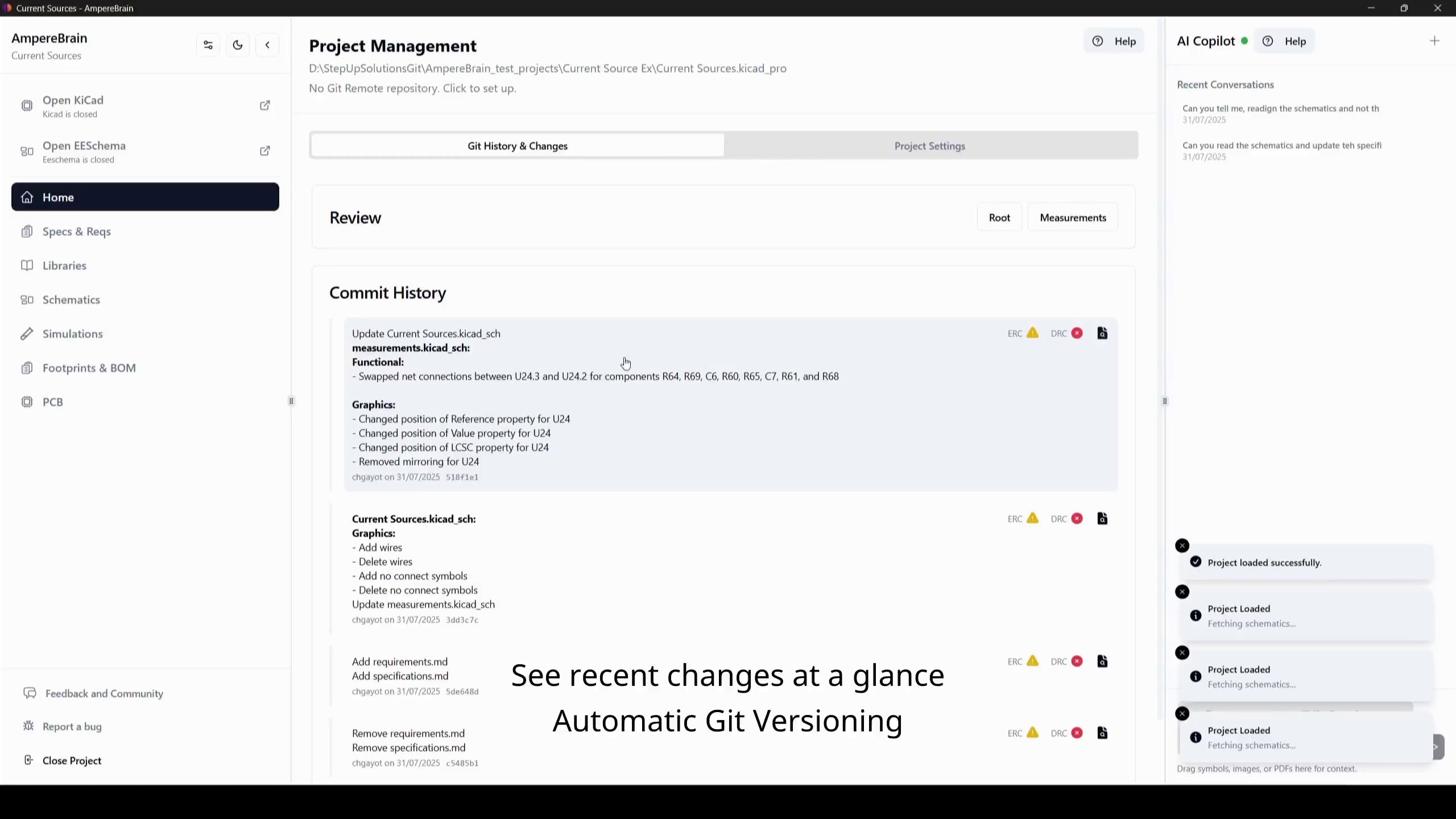
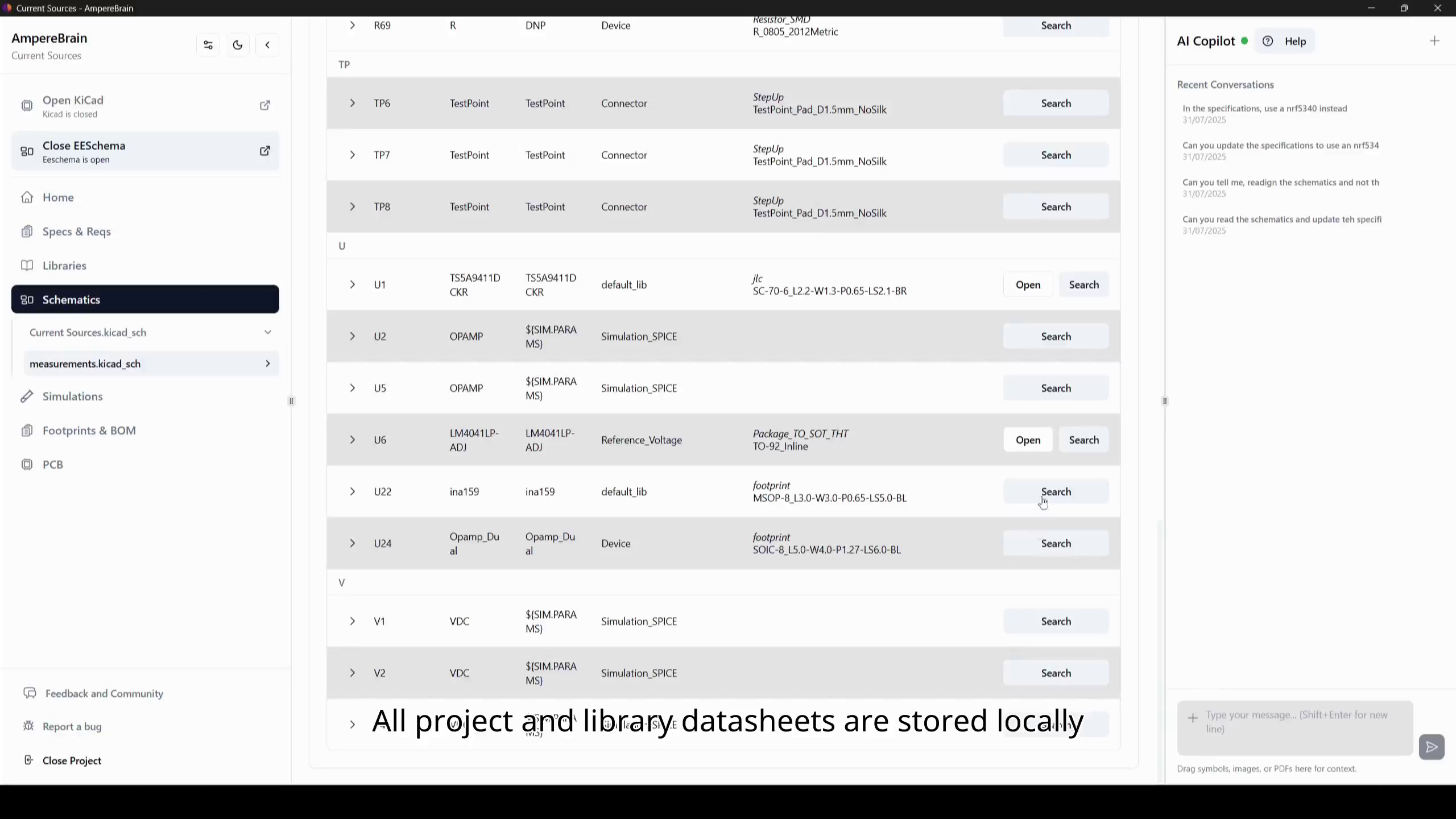
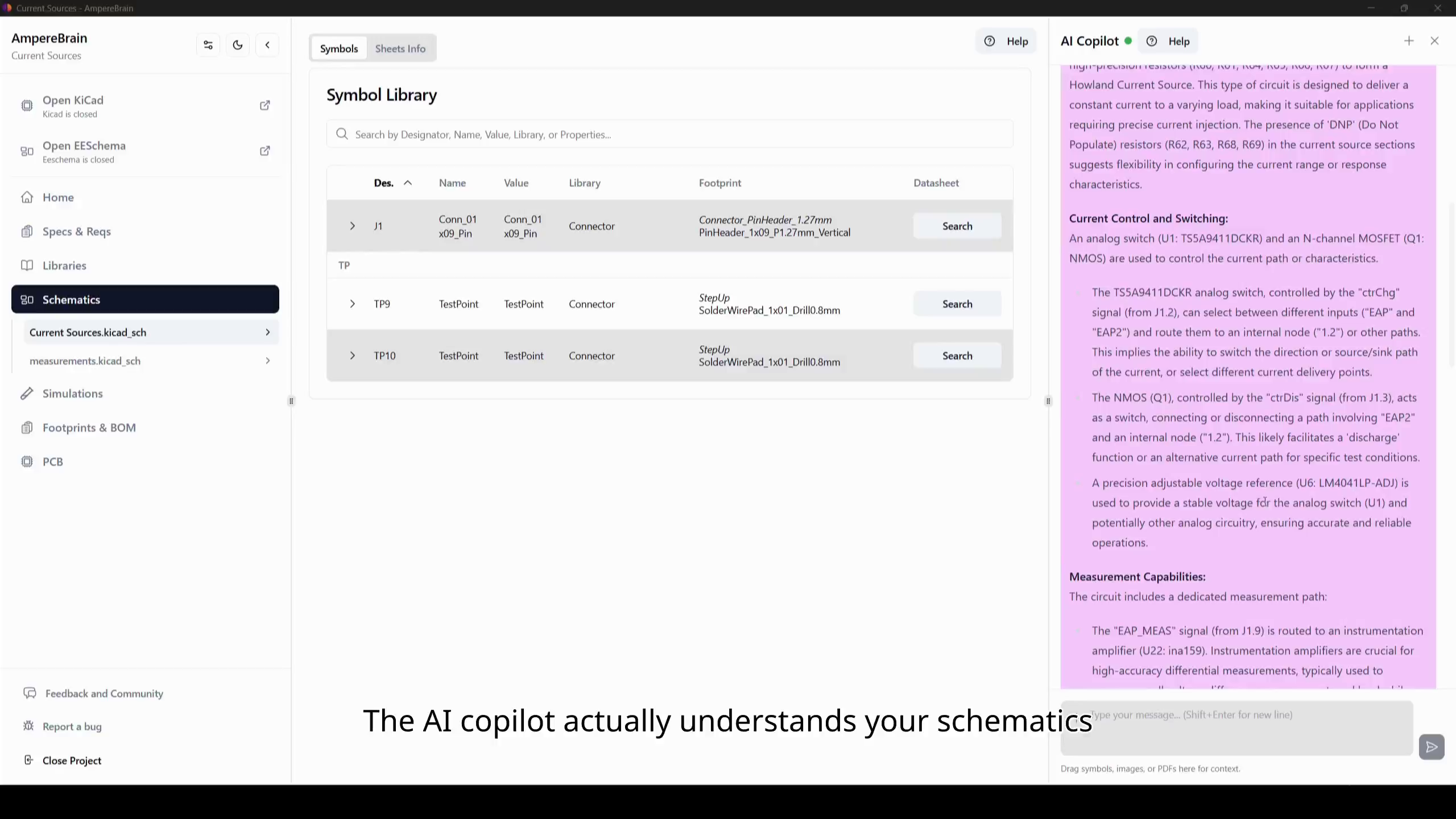
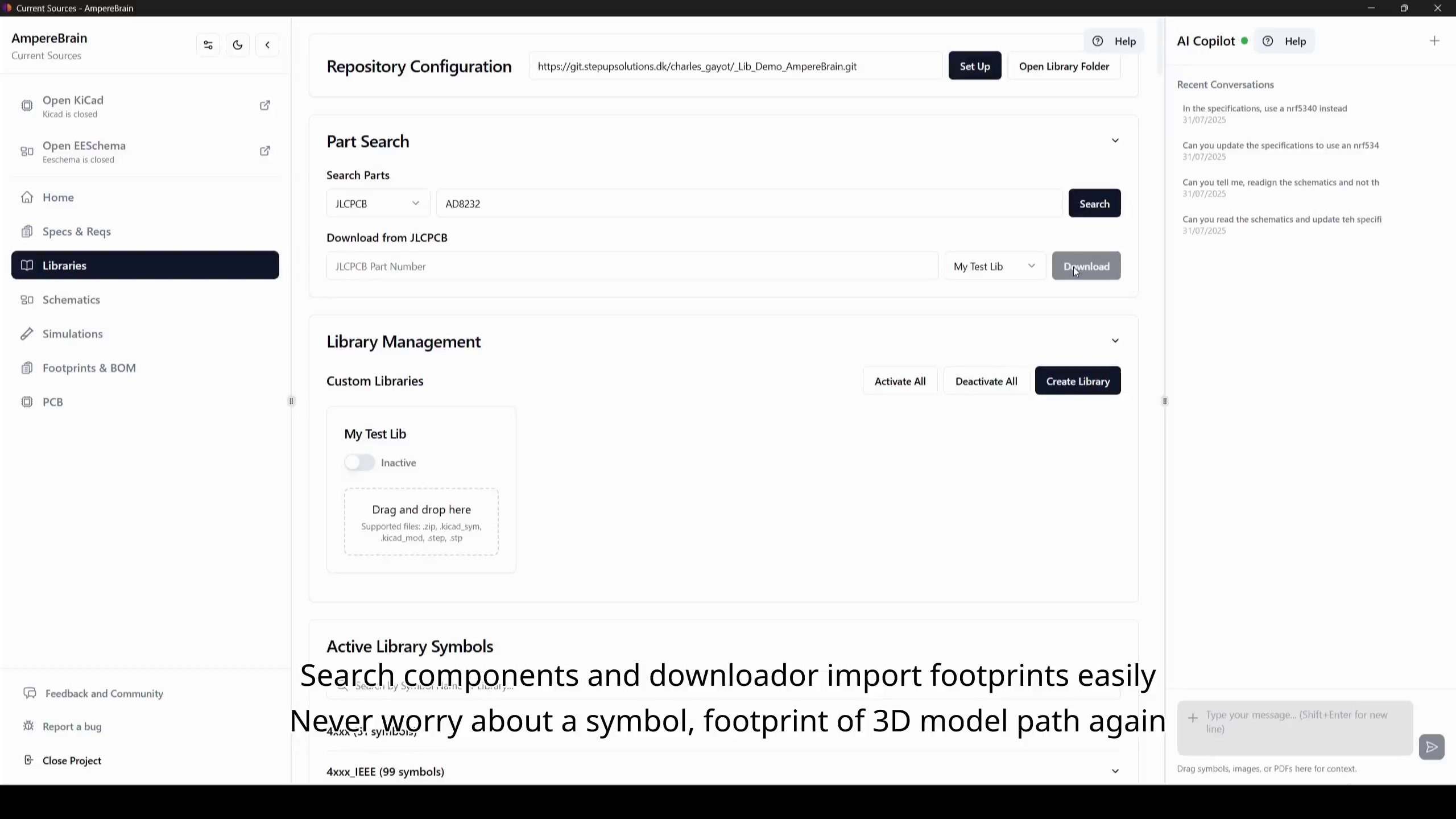
Symbols, footprints, SPICE and 3D models, and the documents behind them come from shared libraries with datasheets, application notes, and errata attached, and your KiCad footprint is compared against the datasheet reference automatically. That is the check a bigger company would have a librarian for.
- 03
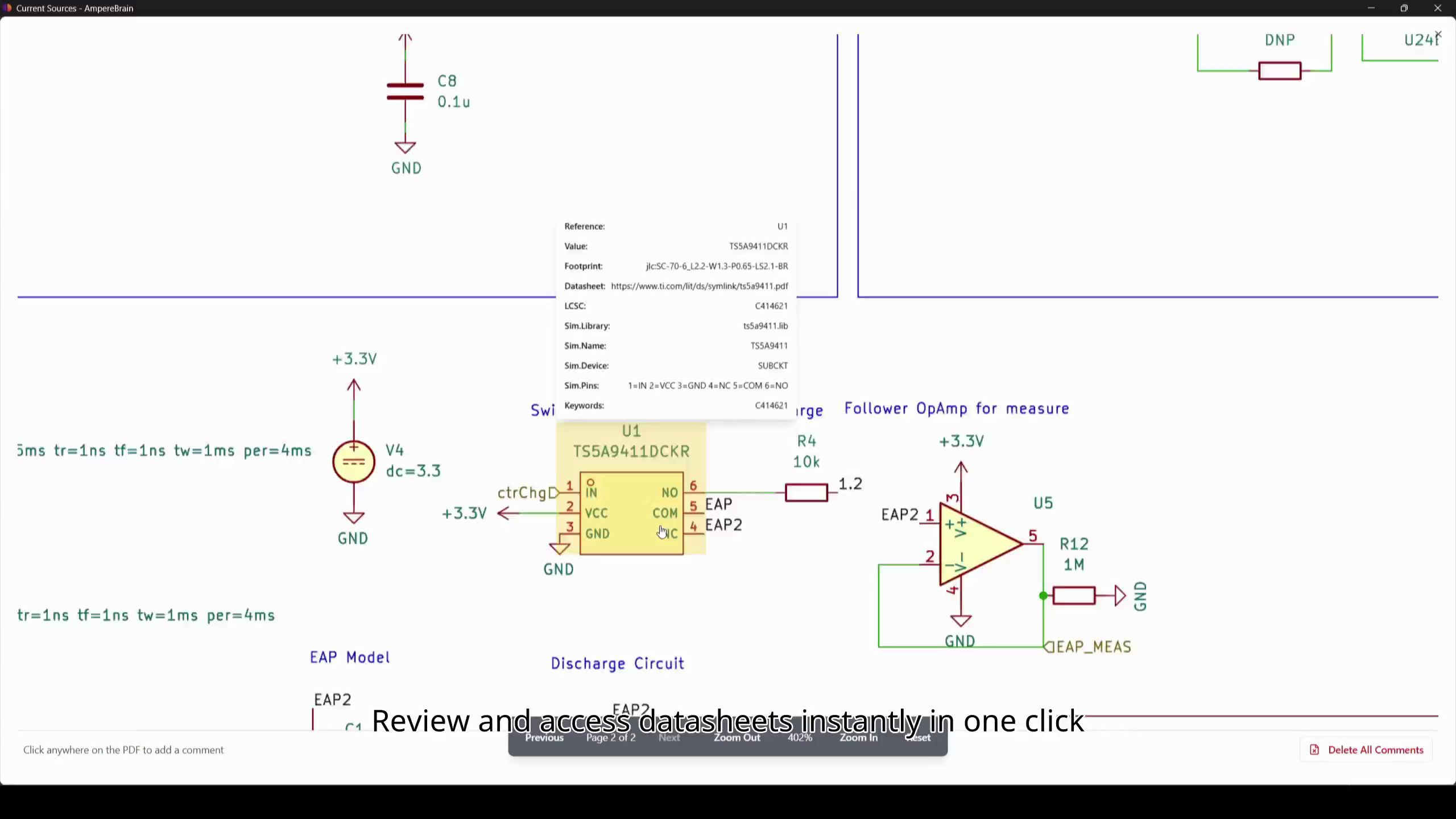
Let the history write itself
Commits are created automatically with descriptive messages, whether the change came from you or the assistant. Reviewing what changed, when, and why does not depend on anyone remembering to record it.
- 04
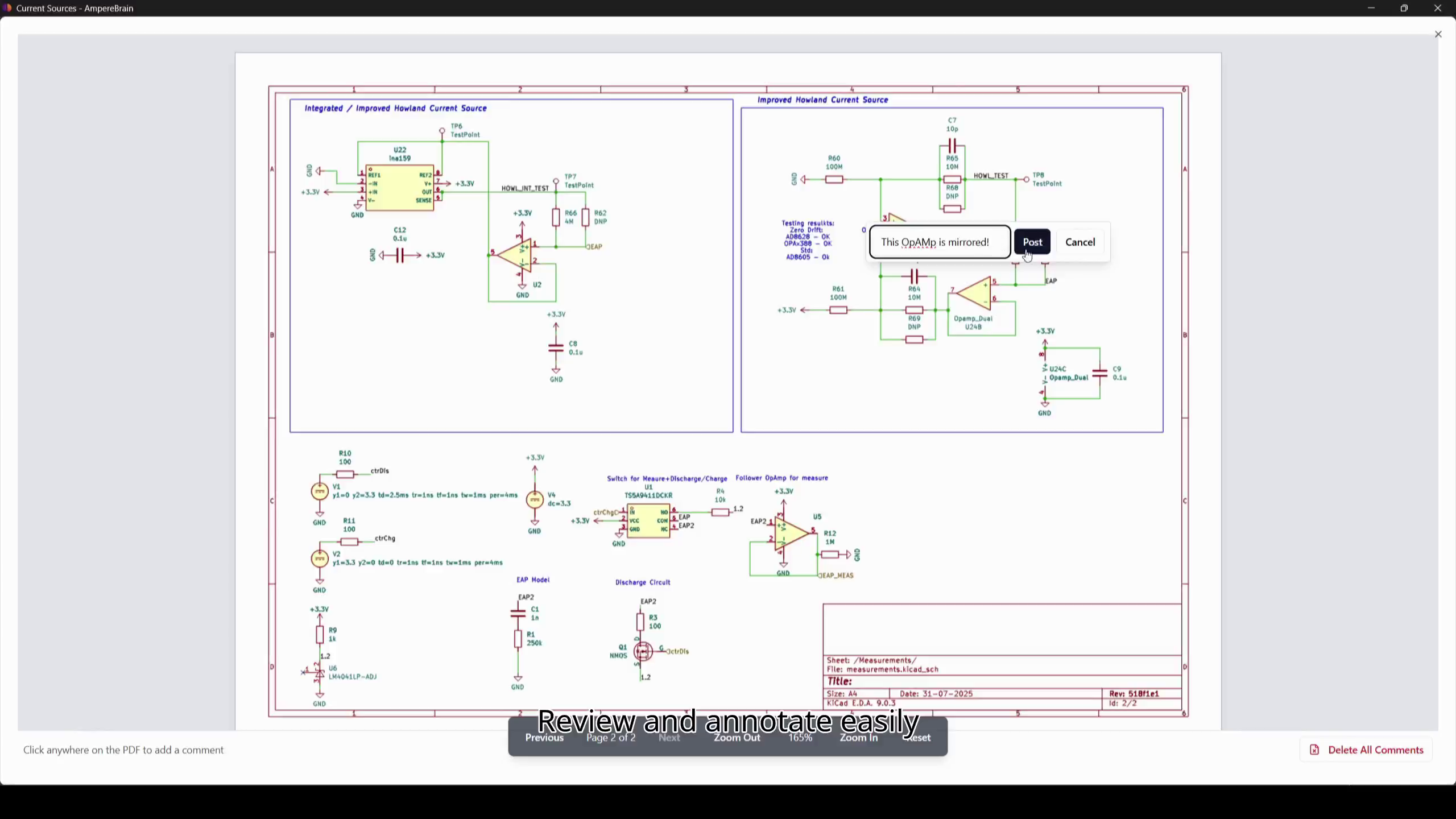
Review without inventing a review culture
Comments are pinned to the schematic with threads and severity levels, and decisions stay tied to the revision they belong to. A three-person team gets the traceability of a formal design review without holding one.
- 05
See the risk before it becomes a surprise
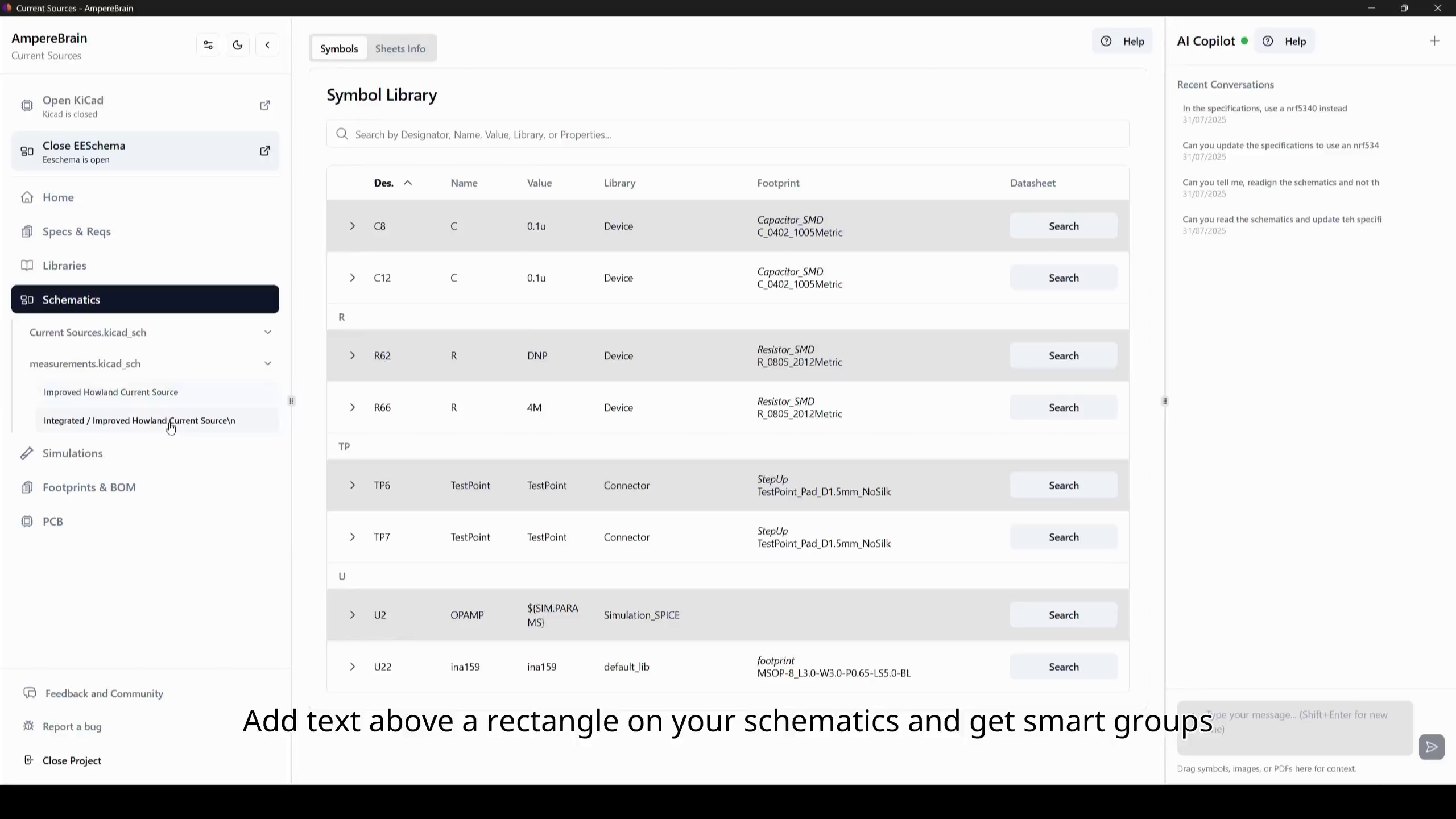
The dashboard shows DRC and ERC results, BOM status, part availability for the versions you are building, whether simulation still passes against the production schematic, and which requirements are still waiting on approval.
- 06
Never depend on a single supplier
Assign several suppliers to a component and mark which is primary and which is secondary, so your BOM carries ready alternatives instead of one fixed choice. Availability and lifecycle are visible as you work, so a supply problem is something you saw coming rather than something you discovered at the quote.
- 07
Answer due diligence with a repository
When an investor, a customer, or your first engineering hire asks how the design got to where it is, the answer is the project: the approved specification, the full revision history with descriptive commits, review decisions tied to their revisions, the BOM, and the exportable documentation.
You are not adding a process. You are getting the output of one — and when the team grows, the same project runs on your own infrastructure with your own models.