
Use case — Freelancers
Work solo. Deliver to your client through Git, not through status meetings
A revision history your client can follow, one approved specification, review threads where the decisions live, and a handover with the fabrication bundle, the 3D model, and the Markdown docs and pinout.
- 01
Turn the client's brief into an approved spec
Specifications and requirements start from a structured template and the assistant helps you complete them. The client reviews and approves one document, which stays versioned with the project instead of buried in an email thread.
- 02
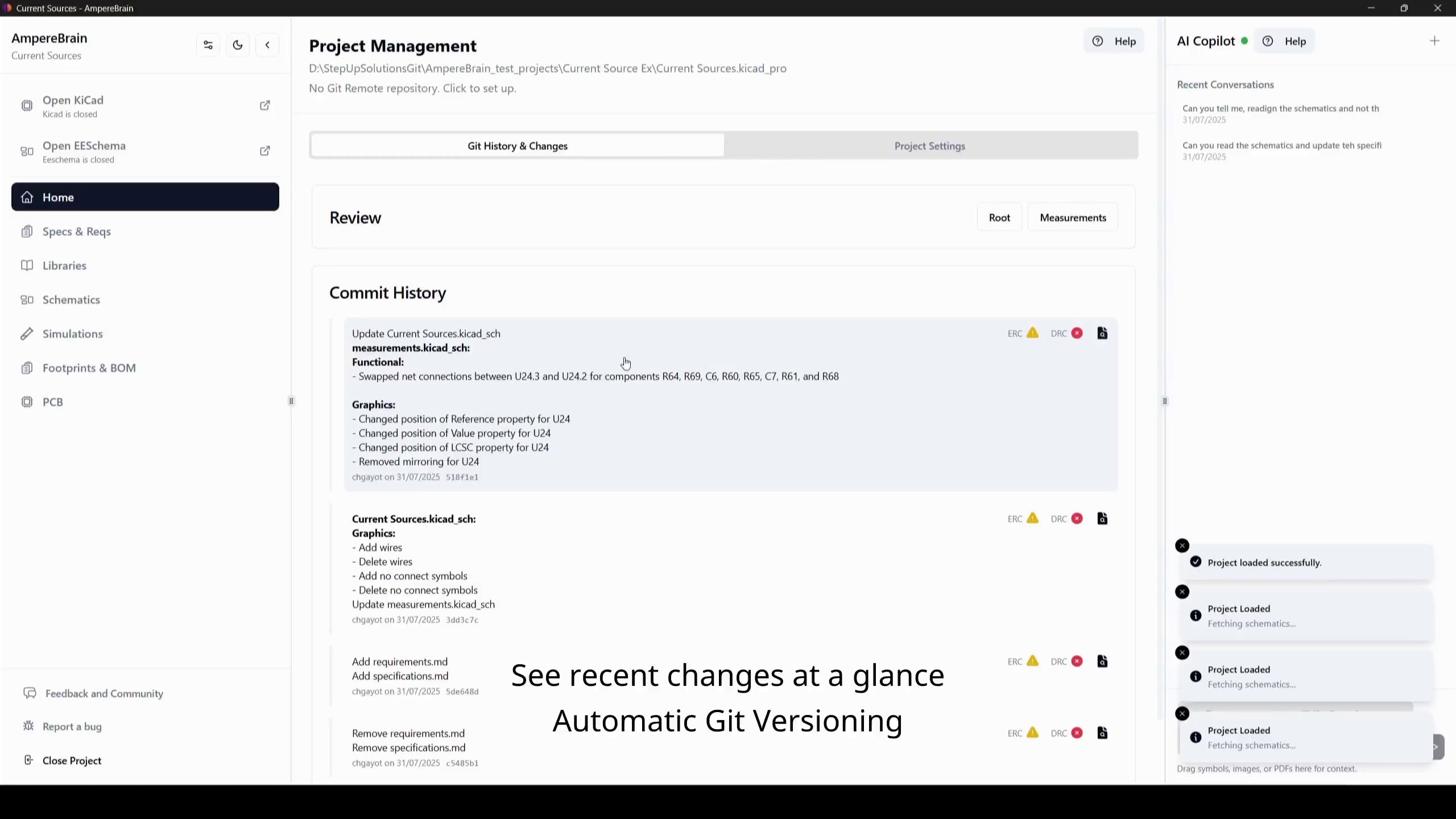
Work locally, keep a history the client can follow
Commits are created automatically with descriptive messages as you design, and the remote repository stays in sync. Your client sees genuine progress in the history, not a weekly summary written from memory.
- 03
Answer "how is it going?" with a link
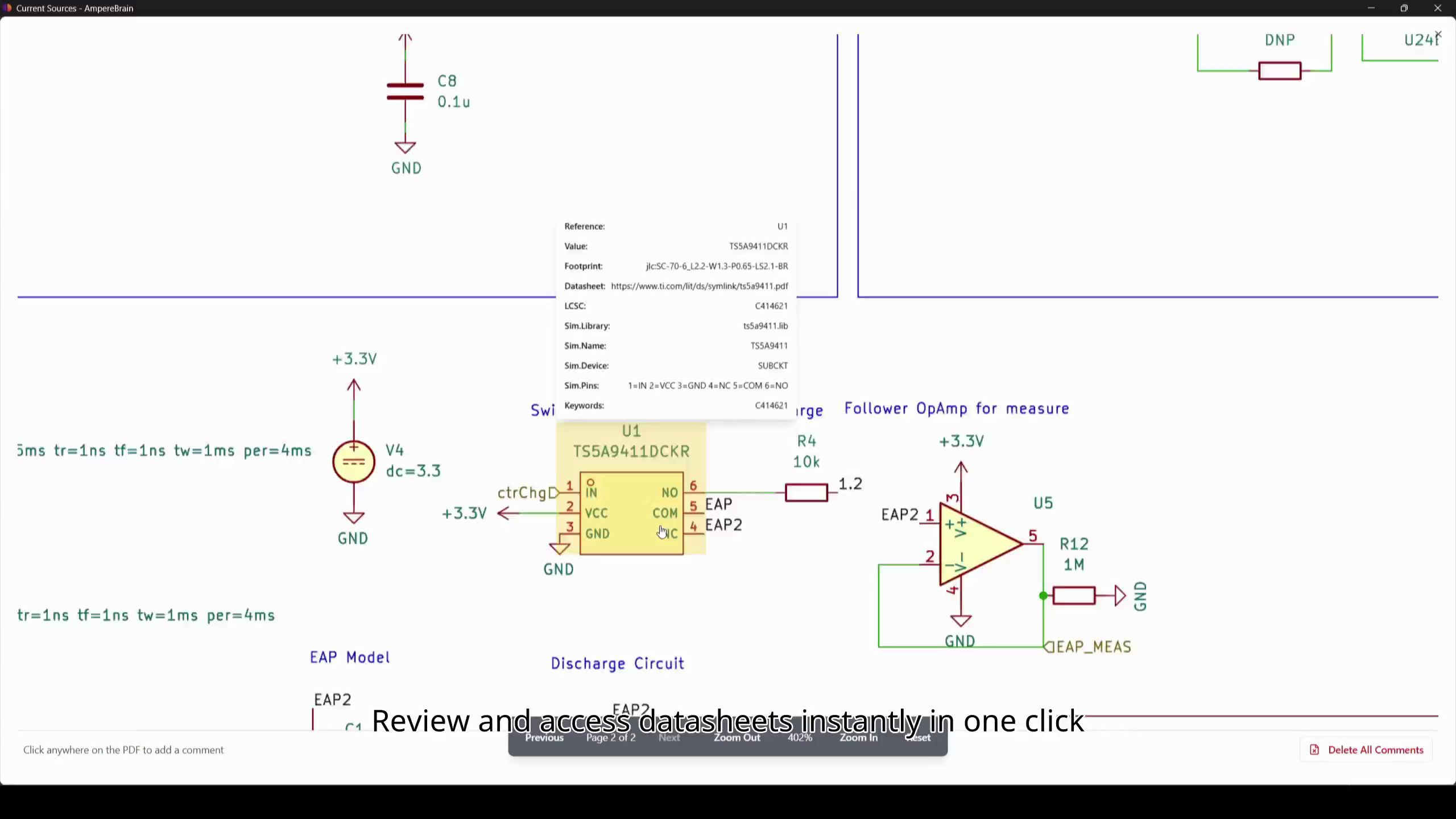
The dashboard shows what is passing and what is outstanding: DRC and ERC results, BOM status, part availability for the variants you are building, and whether simulation still passes against the production schematic.
- 04
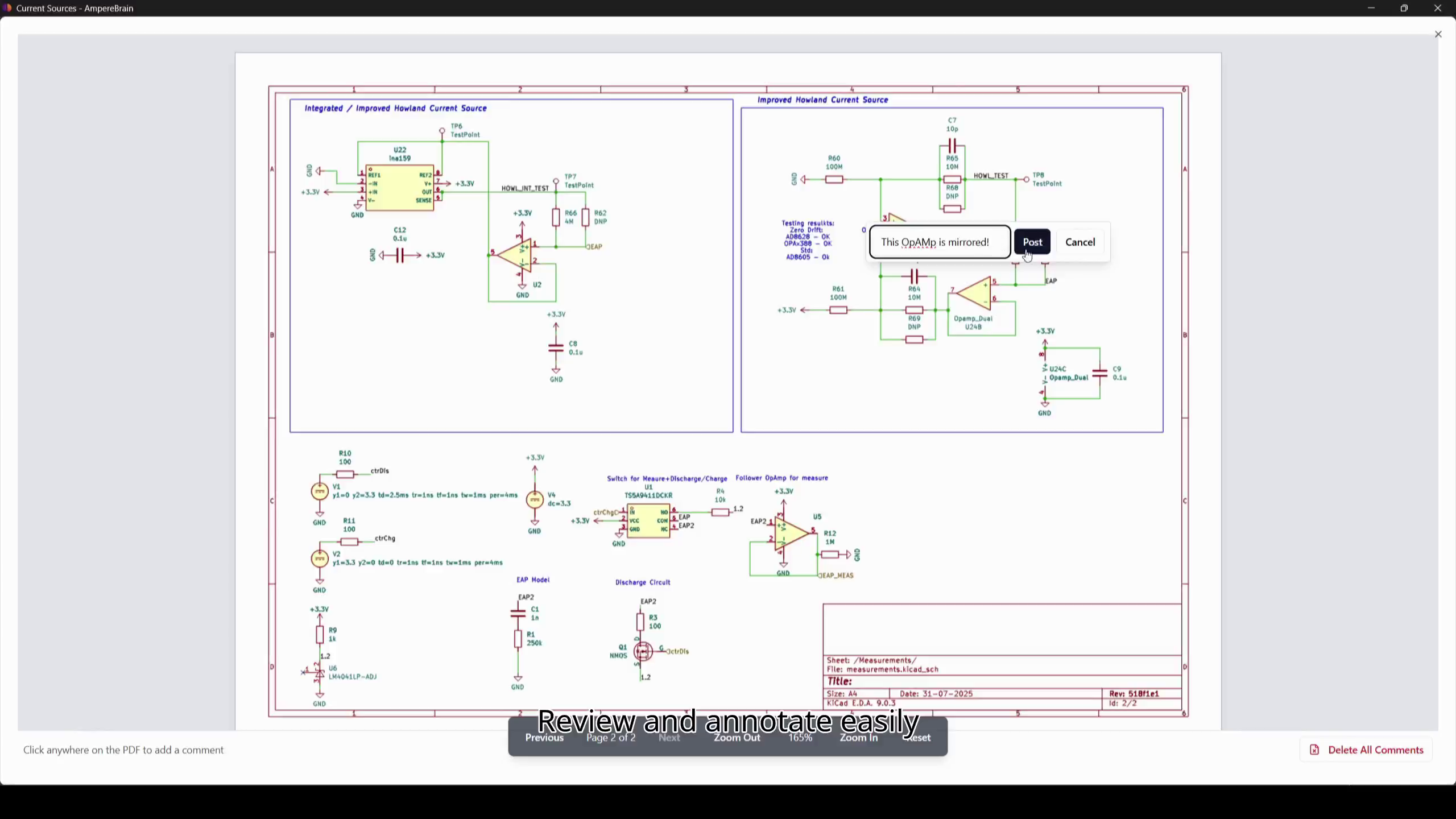
Review with the client in the place the work lives
Comments are pinned to the schematic with threads and severity levels, and the client decisions stay attached to the revision they concern. Scope discussions stop happening verbally.
- 05
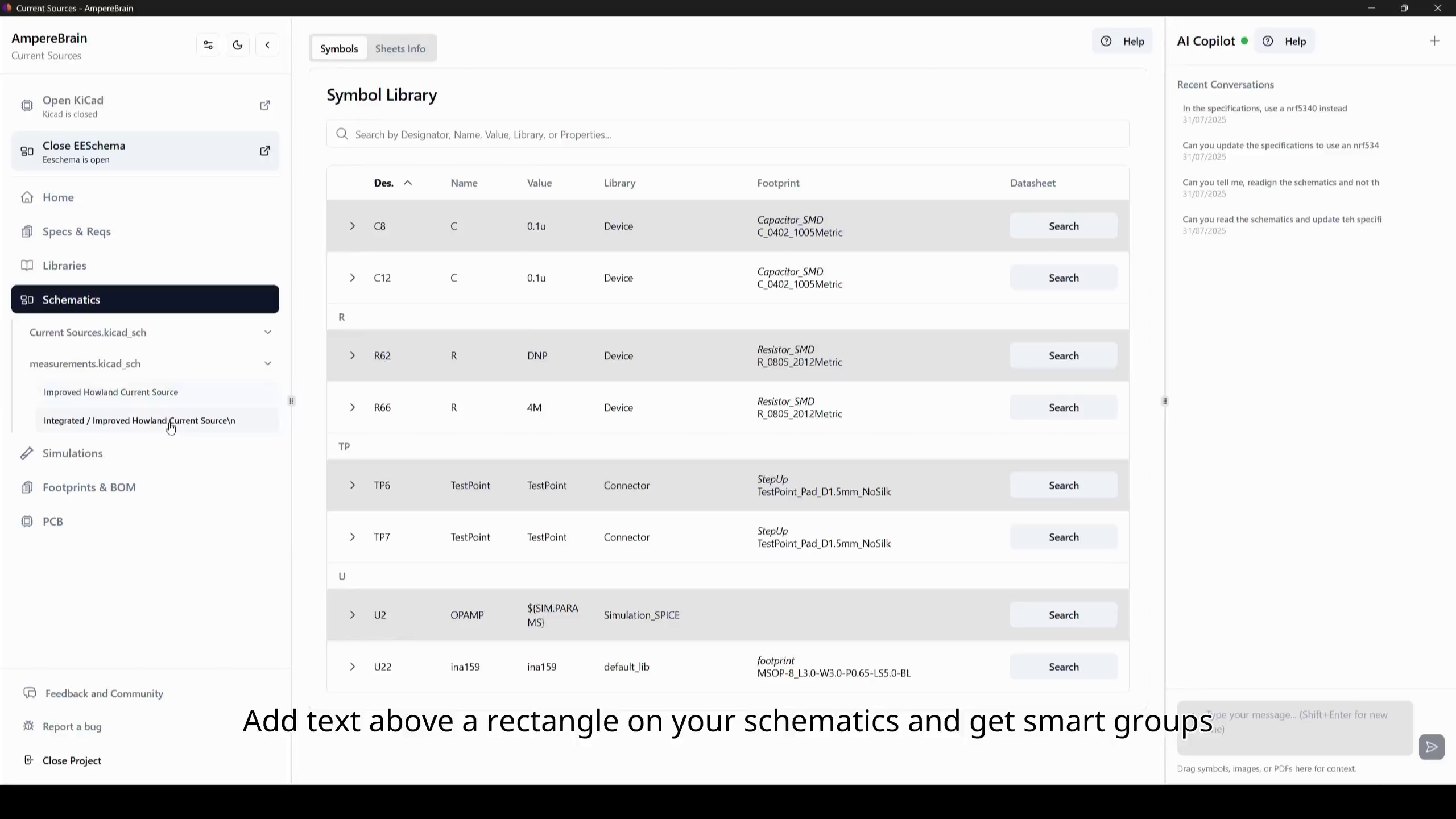
Prove the parts are real and buyable
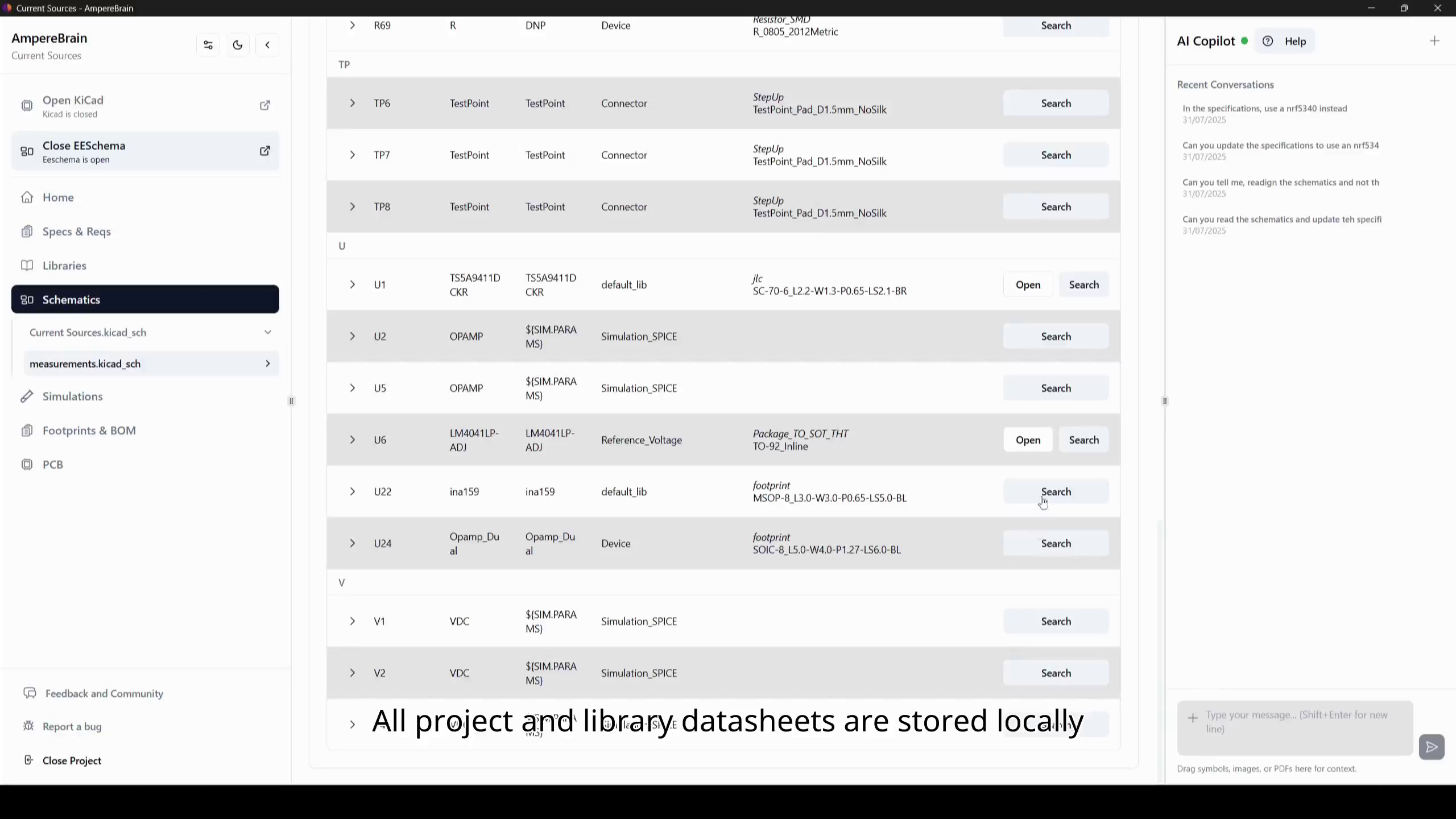
Lifecycle status, availability, and pricing come from connected distributors, and the BOM is populated by schematic group, so the quote you send is based on parts you can actually order.
- 06
Simulate before you promise
Simulations are built from the production schematic itself, so the run you show the client is the design you will deliver, and the workbook stays with the project.
- 07
Hand over everything, in one delivery
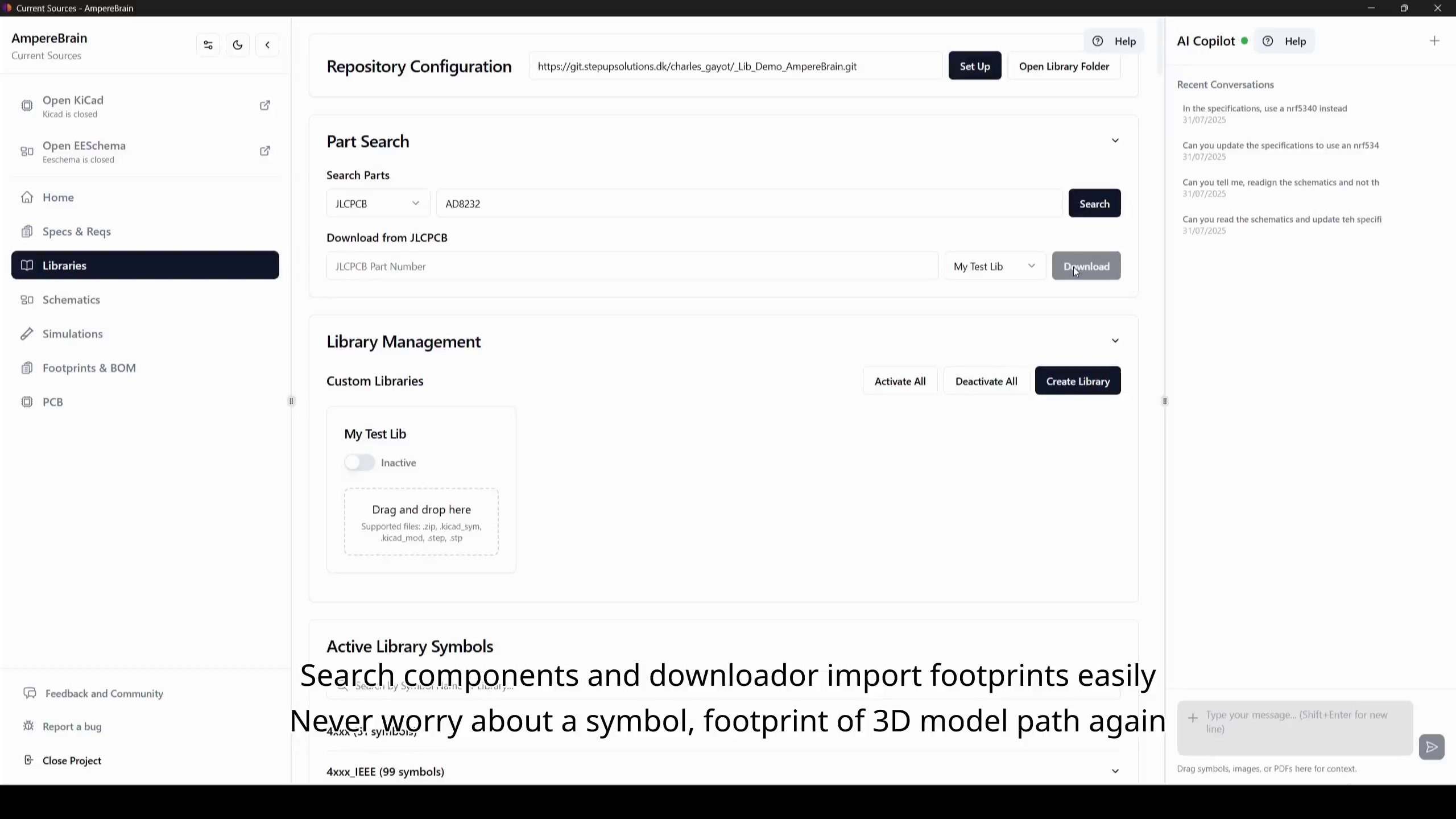
A fabrication bundle matched to the client manufacturer, the 3D model for their mechanical team, the technical documents as Markdown with the pinout for their firmware team, and the full revision history behind all of it.
The deliverable stops being a zip file at the end of a project and becomes a repository that shows how the design got there.