
Use case — Engineering teams
Everyone works from the same project, at any team size
Specs everyone approves, one library everyone shares, an alternative supplier on every part, and verification that never stops.
- 01
Agree on what you are building
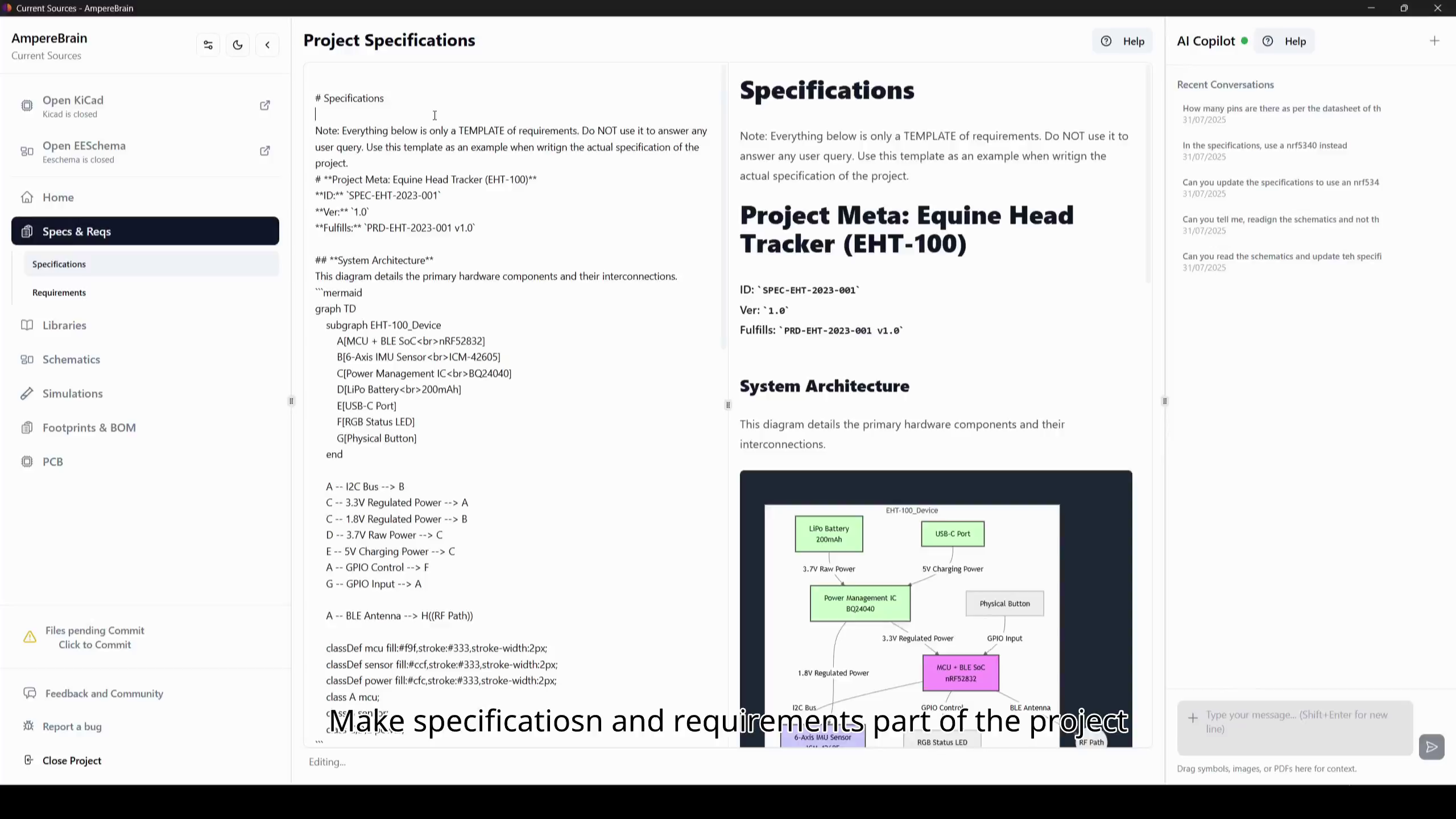
Specifications and requirements start from a structured template, and the assistant helps the team complete them. Everyone reviews and approves the same version, and it stays versioned with the project, so scope is never a matter of memory.
- 02
See the whole project before the stand-up
The dashboard answers the status questions in one look: DRC and ERC results, BOM status, part availability for the variants you build, whether simulation still passes against the production schematic, and which requirements are still waiting on review or approval.
- 03
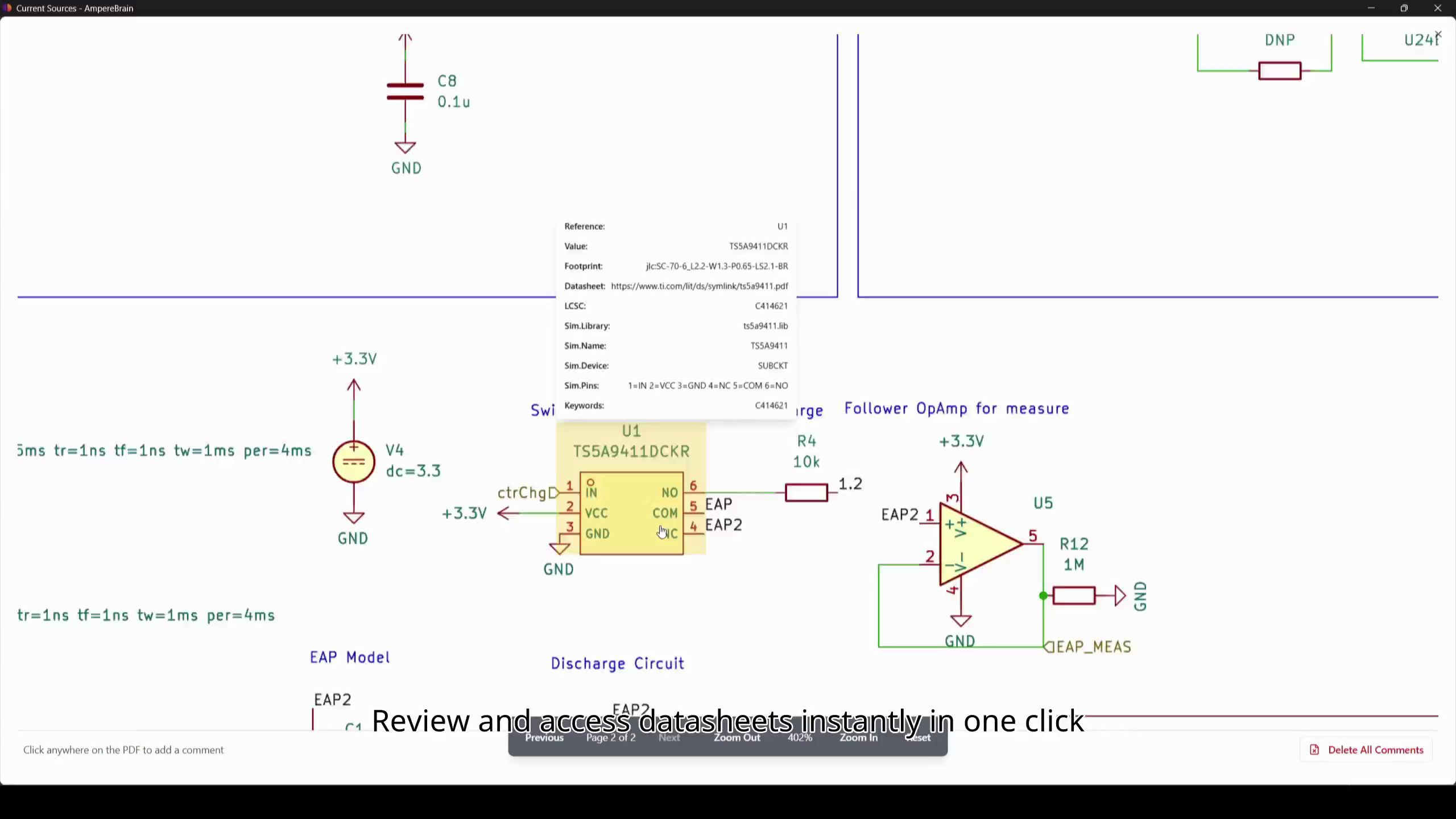
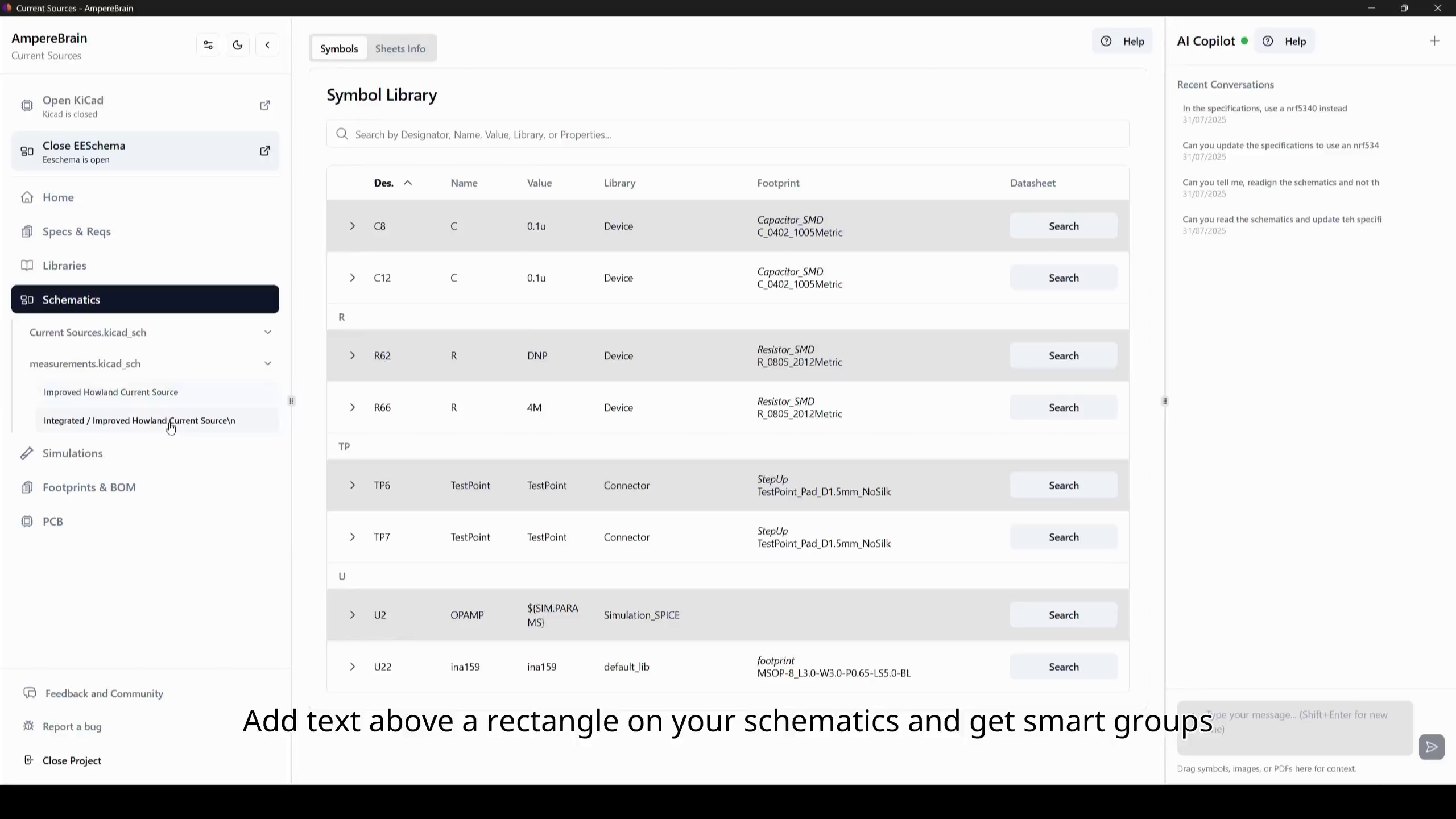
Everyone pulls from one library
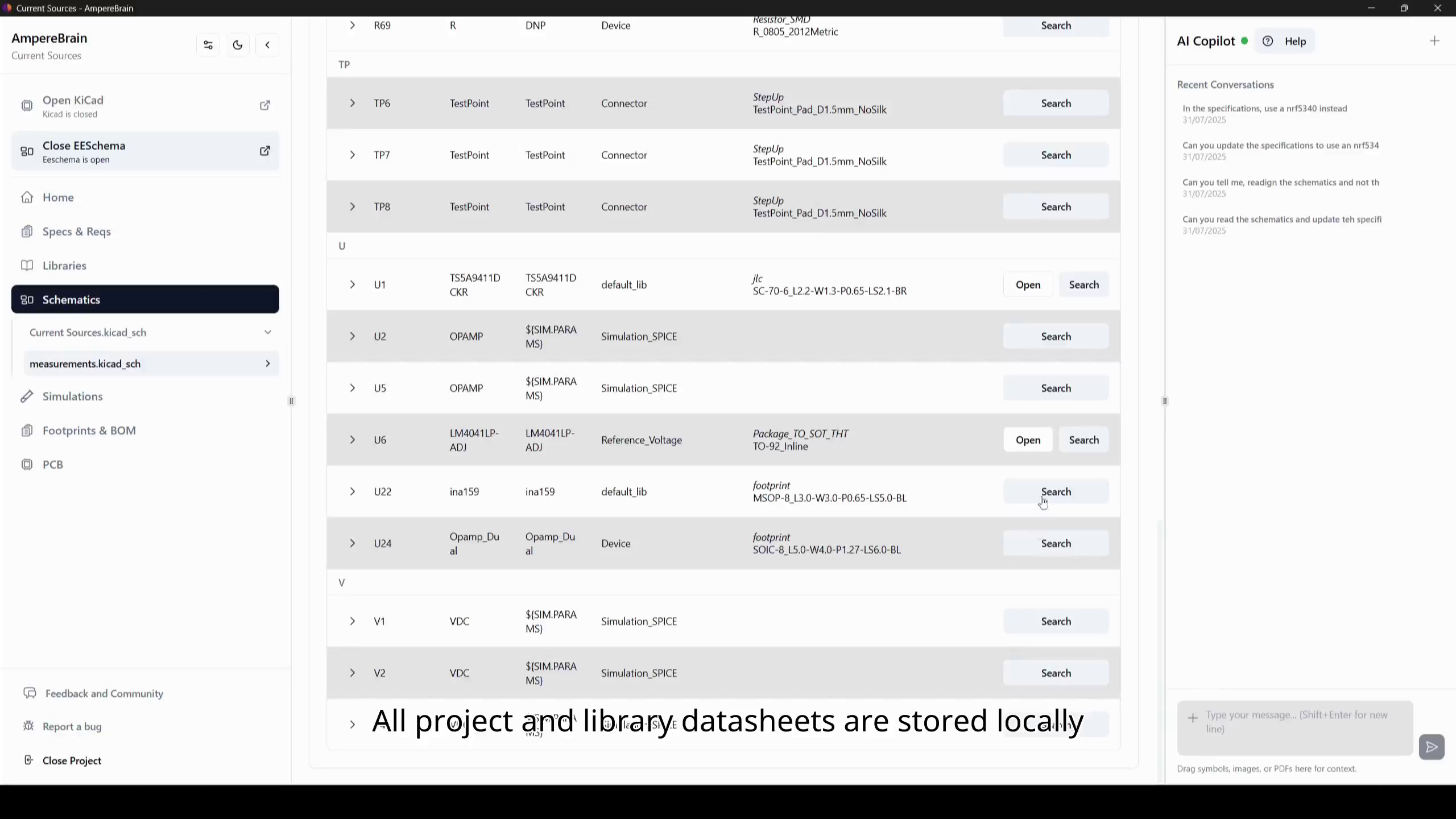
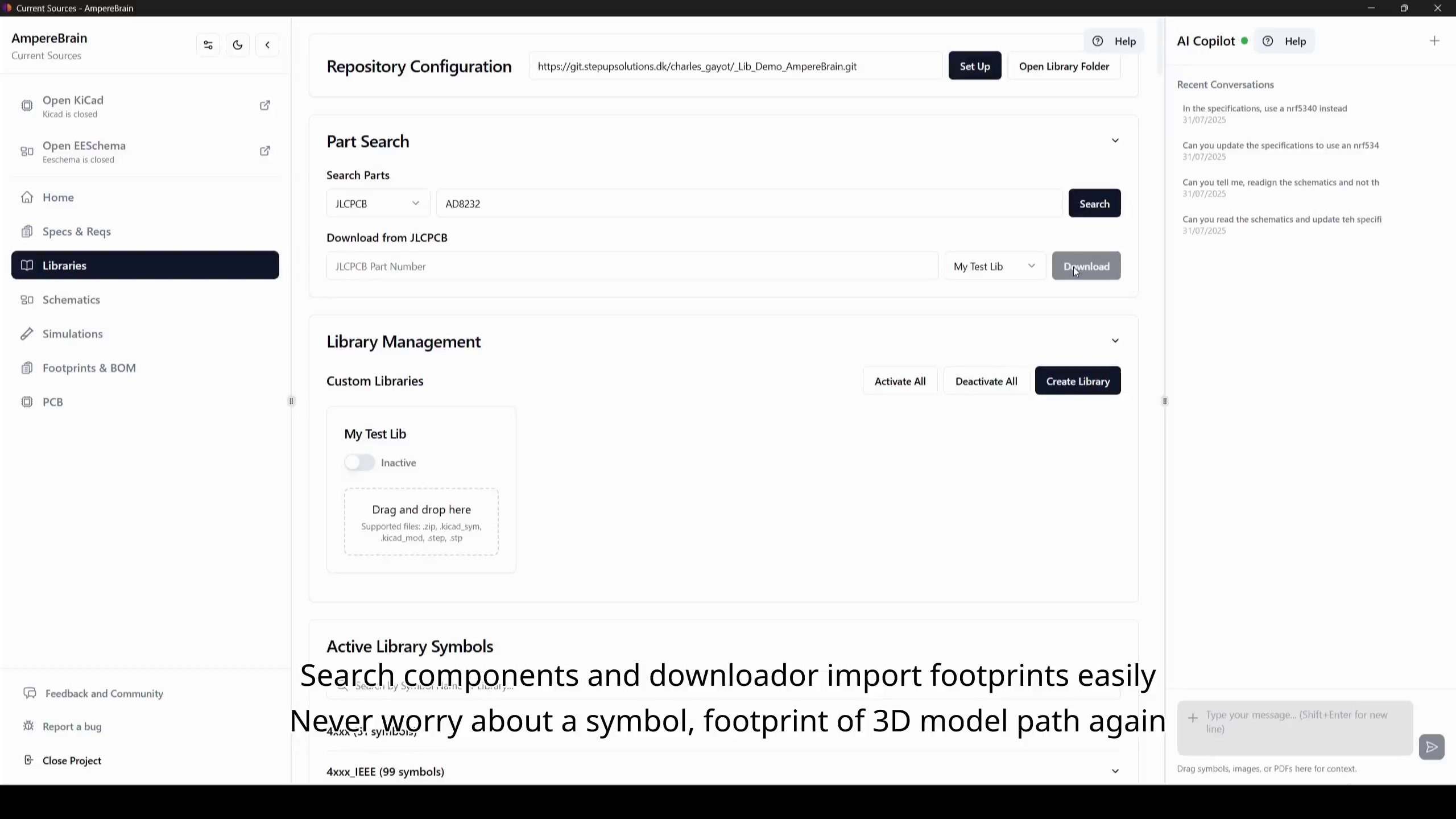
Symbols, footprints, 3D models, and the documents behind them live in shared, project-scoped libraries. Datasheets, application notes, and errata are retrieved automatically, so two engineers never design around two different versions of the same part.
- 04
Never depend on a single supplier
Several suppliers can be assigned to the same component, with one marked primary and another secondary, so sourcing becomes a property of the part rather than a spreadsheet somebody maintains. Your BOM stops being one fixed list and carries ready alternatives.
- 05
Watch supply for every production version
BOM supply and part availability are visible per production variant, at any time, so you can see that the version you are actually building has a part going end-of-life before it reaches the line.
- 06
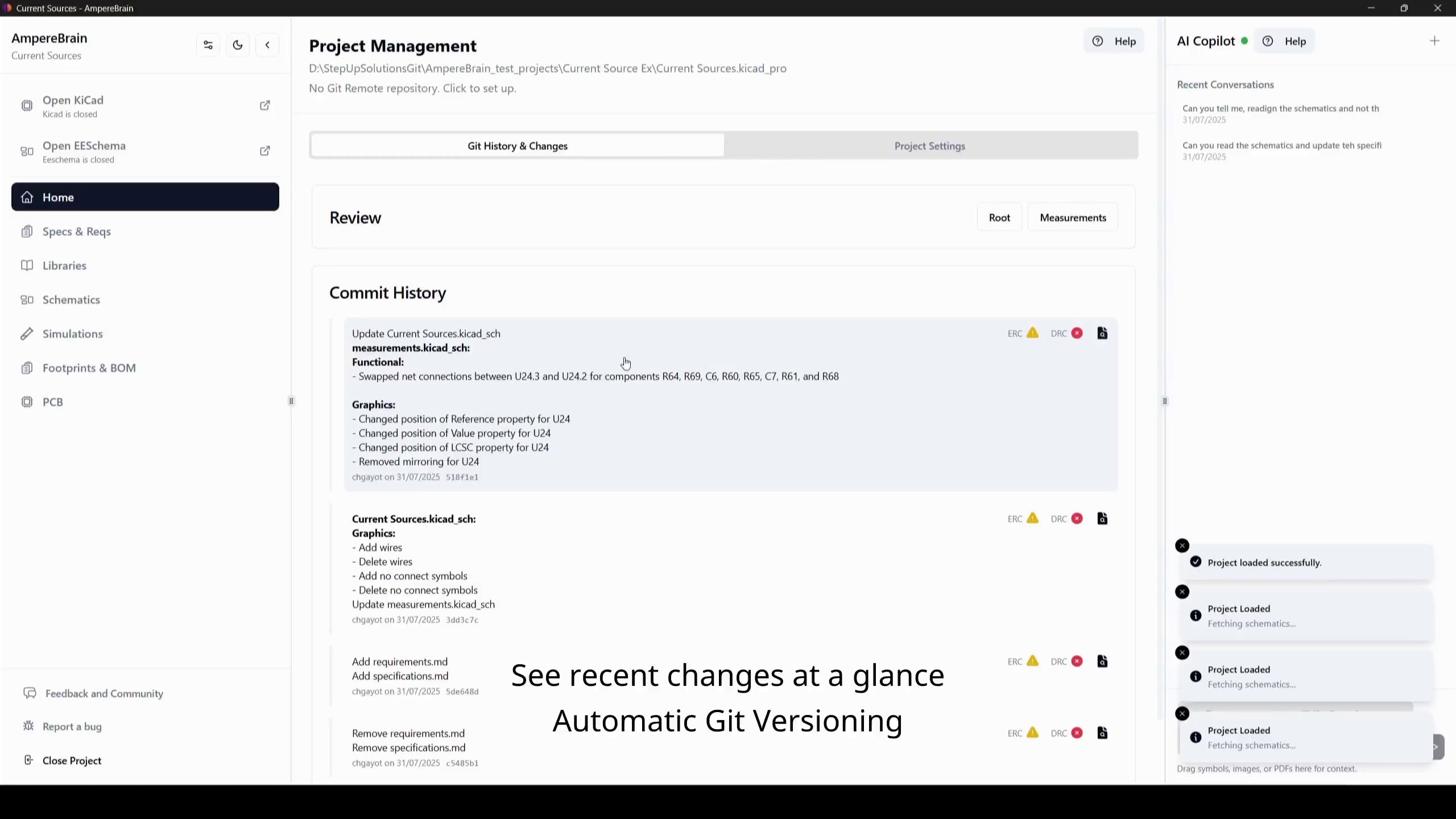
Changes land in the shared history
Commits are created automatically with descriptive messages, whether the change came from a person or the assistant, and the remote repository stays in sync. Nobody has to be the one who remembers to commit.
- 07
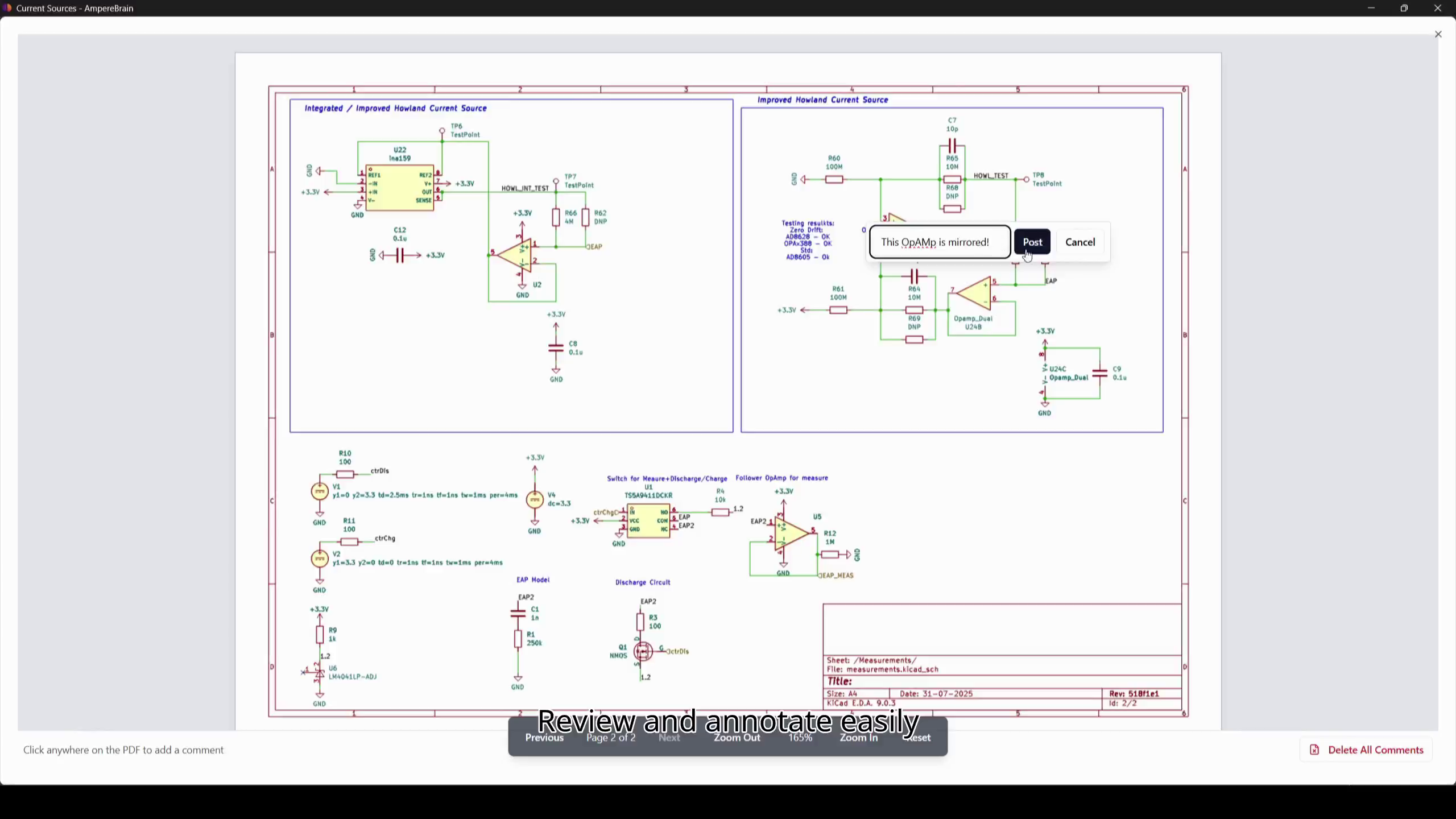
Review becomes a thread, not a meeting
Comments are pinned directly to the schematic, with threads and severity levels, and every decision stays tied to the revision it belongs to. Board feedback turns into tracked issues instead of a chat backlog.
- 08
Verification keeps running while you work
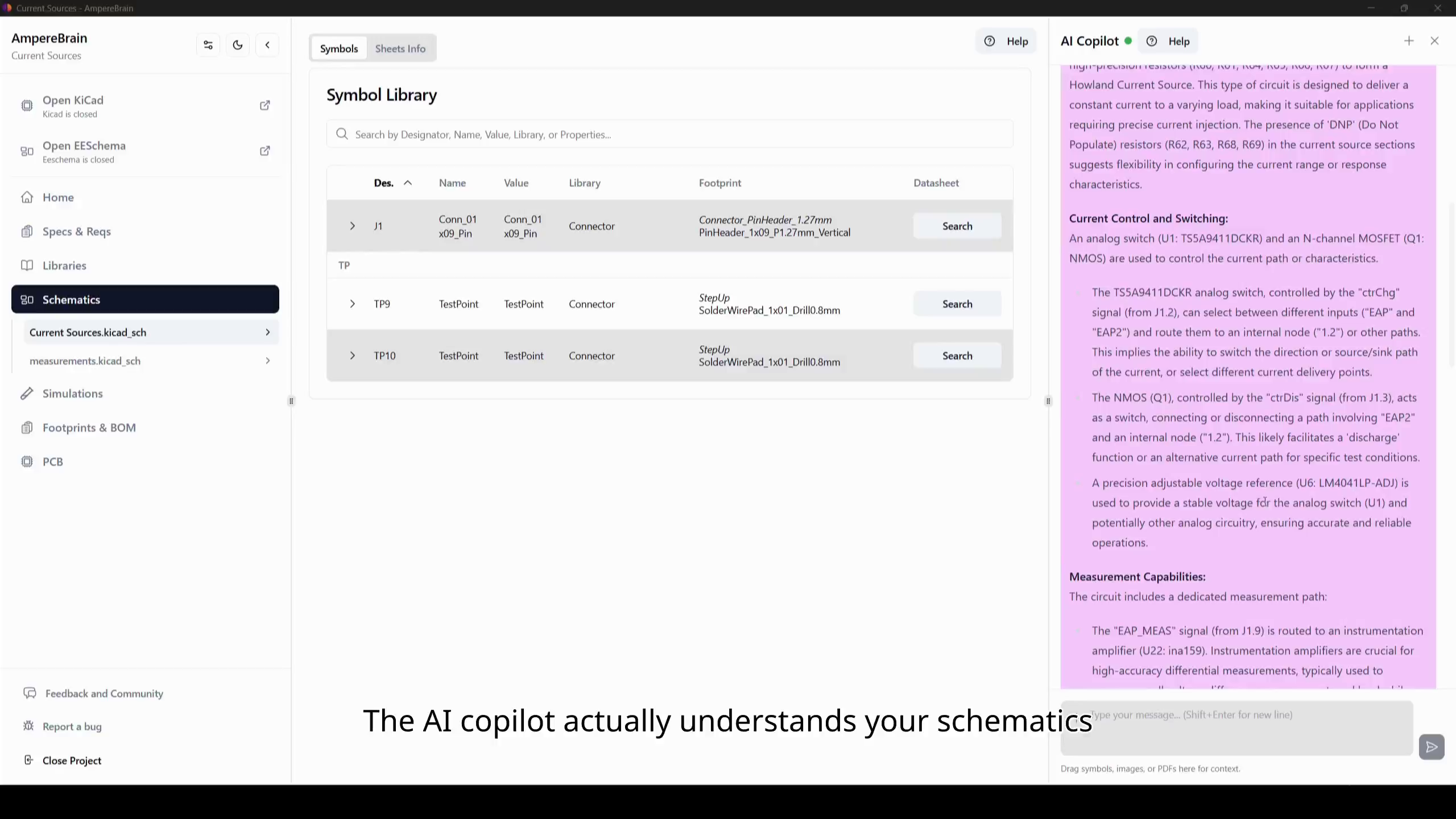
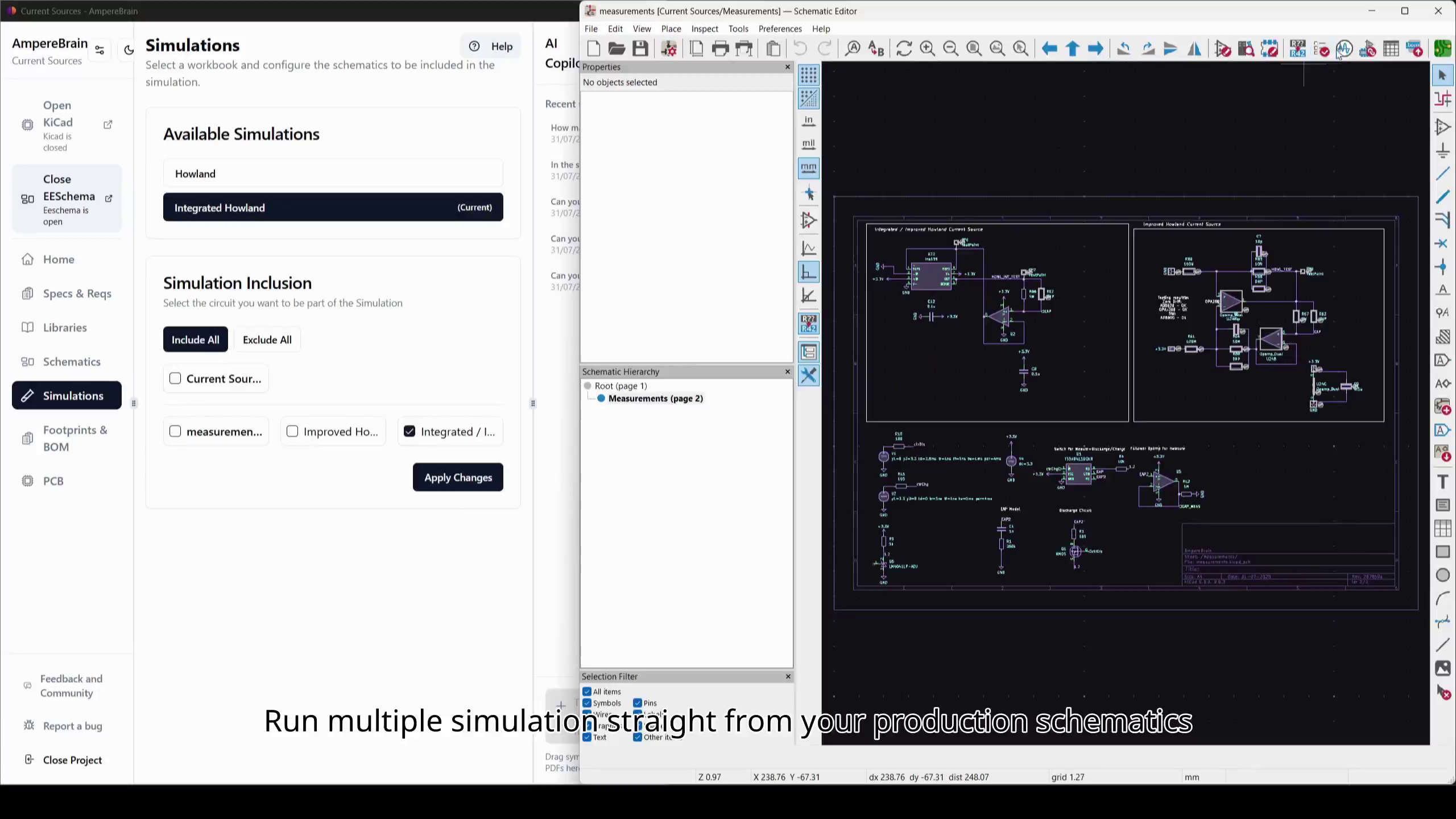
ERC and DRC, part lifecycle and availability, footprint-to-datasheet compliance, and simulation against the production schematic are checked continuously. A problem surfaces when it is introduced, not when the board is about to be ordered.
- 09
Hand off to everyone downstream at once
The fabrication outputs, the 3D model for mechanical design, and the technical documents as Markdown with the pinout of the board and MCUs all come from the same versioned source.
Three engineers or three hundred, on one project context. Larger teams run the entire stack inside their own infrastructure, on their own models, with telemetry fully disabled.